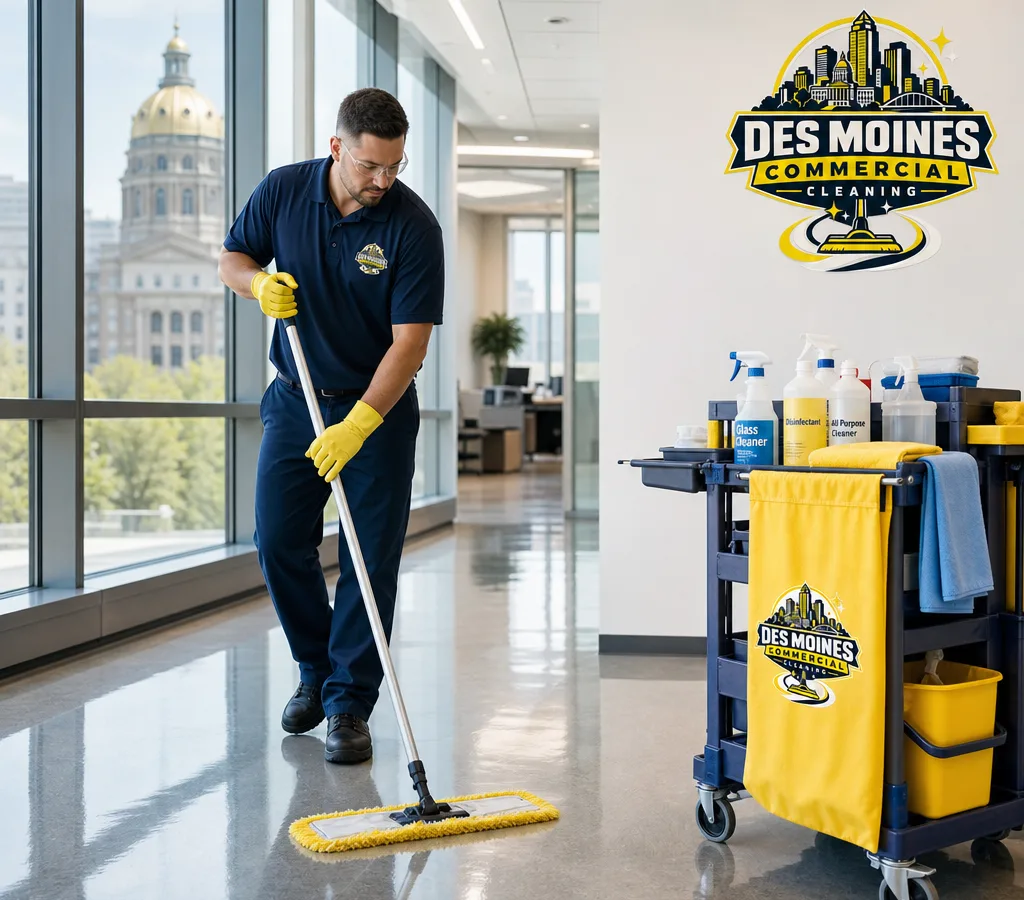
Cleaning technician mopping and detailing a bright modern office corridor with a stocked cleaning cart

Commercial cleaning in Waukee

Commercial Cleaning in Waukee

Commercial cleaning for Waukee shops, offices, clinics and service businesses, written plainly for owners setting up a first cleaning contract and deciding what they should actually be paying for.

✓Plain written scope
✓No long lock-in
✓Questions answered first
✓No travel charge

A first contract

Buying cleaning for the first time

A lot of businesses here reach a size where somebody on staff has quietly been handling the cleaning, and it stops working. The restrooms need more than a wipe, the entry carries in everything from the parking lot, and nobody wants to stay late to vacuum. The next step is hiring a contractor, and most owners do that having never read a cleaning scope before.

This page is written for that situation. Below is what a cleaning scope should contain, how frequency actually gets decided, what the pricing is based on, and the questions worth asking any contractor you talk to, including us. Des Moines Commercial Cleaning serves this area from 1800 Dixon St, Suite 4, and you are welcome to use what follows to compare quotes even if you end up hiring somebody else.

If you are comparing providers, start by looking for three things: a written scope that matches your space, a schedule that protects productivity—before hours, after hours, or low-traffic windows—and a plan for floors. Floors show wear fast in Iowa winters and wet spring days, and they are usually the first place a “quick clean” falls short.

For businesses that need help beyond office environments, our team also handles broader commercial cleaning services in Des Moines with the same approach: define the scope, set the routine, then verify the results.
Request a Callback

Inside a scope

What a written scope should contain

A task list by room

Not "clean the office" but a list per room: what is cleaned, what is wiped, what is vacuumed, what is restocked. If a document does not say what happens in each room, there is nothing to hold anyone to when standards slip three months later.

Frequency per task

Tasks sit on different cycles. Restrooms and trash are every visit. Interior glass, high dusting and baseboards are usually monthly or quarterly. A good scope marks each task with its own frequency rather than implying everything happens every time.

Who supplies consumables

Paper towels, toilet tissue, hand soap and can liners cost real money, and the scope should say plainly whether you buy them or the contractor does. This is the single most common surprise on a first invoice.

Visit days and timing

Which days, roughly what time, and whether the crew comes before you open, after you close or during the day. Access arrangements belong here too: keys, codes, alarm handling and who to call if something goes wrong.

Floor types and methods

Your floor materials named, with the method for each. This protects you: it is the paragraph that stops a crew putting the wrong product on a vinyl plank floor or a sealed concrete surface and dulling it permanently.

How problems get handled

Who you contact, how quickly you get a response, and how a correction is recorded. A scope that never mentions what happens when something is missed is a scope that has not thought about it.

Request a Callback

Deciding frequency

How often you need it

Most first-time buyers either over-buy or under-buy, and both are expensive. Frequency comes from how the space is used rather than from its size. A small shop with heavy public traffic and one restroom may genuinely need daily attention, while a quiet professional office twice that size is fine on two visits a week.

We match methods to the material and the condition:

  • Count the people through the door daily, not the square footage: traffic drives restroom and entry work more than area does.
  • Restroom count and public access usually decide frequency, since public restrooms set the floor for the whole schedule.
  • Food on site, whether a break room or customer food service, raises frequency because of odor and pests rather than appearance.
  • Start at a sensible frequency and adjust after a month, which is cheaper than guessing high and paying for it all year.

A good floor plan is measurable. You can see it in cleaner corners, fewer black heel marks, and entry lanes that do not turn gray halfway through the week. If you are already using walk-off mats, we will treat them as part of the system and build routines around keeping the entry clean, not just the middle of the room.

Request a Callback
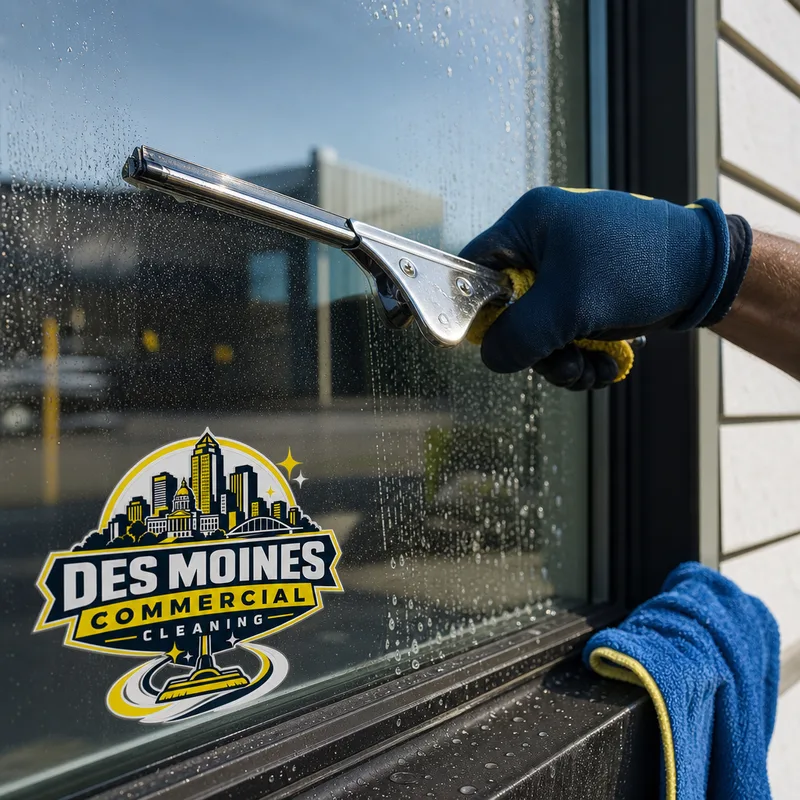
Squeegee pulling clean water from commercial window glass beside a microfiber detail towel

Before you sign

Questions worth asking any contractor

Ask these of everyone you get a quote from. The answers tell you more than the price does, and a contractor who cannot answer them plainly is telling you something useful.

Common deep cleaning scopes include:

  • Will I get this scope in writing, with a task list per room and a frequency marked against each task?
  • What happens when my regular cleaner is sick or on vacation, and will I be told in advance?
  • Who inspects the work, how often, and do I see anything from that inspection?
  • What exactly is not included, and what would be billed separately as project work?
  • How do I reach a person about a problem, and how does a correction get recorded?

Deep cleaning is also useful before a VIP visit, after a long stretch of heavy occupancy, or when switching cleaning providers. It creates a clear baseline so everyone can tell what “clean” looks like in your building.

If you manage multi-tenant suites, deep cleaning between occupants can shorten turnover time because the space shows better during walkthroughs, and issues are easier to document and address.

Request a Callback

Your first month

How the first month goes

01

Walk and talk it through

We walk the space, ask how you use it and what is bothering you, and explain what we would recommend and why. You should leave that conversation understanding the plan, not holding a number you cannot interpret.

02

Get the scope in writing

You get the task list, the frequencies, the floor methods, the consumables arrangement and the visit schedule in a document. Read it and push back on anything that does not match how your business actually runs.

03

Agree access

Keys or codes, alarm handling, which door the crew uses and who gets called if something is wrong. For a first contract this is usually the part owners have not thought about, so we work through it with you.

04

First clean sets the standard

The first visit is usually a deeper one, because it establishes the baseline everything after is measured against. It also shows you concretely what your building looks like when it has been properly cleaned.

05

Review at thirty days

After a month we sit down and adjust: frequency up where it is not holding, down where it is more than you need, and tasks moved between the every-visit list and the periodic list.

Request a Callback
PPE-equipped technician removing construction dust from window frames and baseboards in a renovated office suite

Fair terms

Terms that stay fair

A first-time buyer is the easiest person in the market to tie into a bad agreement. These are the terms we think any small business should expect, and they are worth checking for in anyone's paperwork, not only ours.

We handle post-construction cleanup for office buildouts and renovations across Des Moines, with scopes that typically include:

  • A short notice period rather than a multi-year lock-in, since a cleaning contract should be kept by performance.
  • Pricing tied to a written scope, so a later price change has to point at a scope change you agreed to.
  • Consumables arrangement stated plainly, including what happens if usage runs well above the agreed level.
  • Project work quoted separately and approved before it happens, never added to a routine invoice as a surprise.
  • A named contact who answers, rather than a general number that routes somewhere else entirely.

If the project is still active, we can coordinate around trades and target specific areas so you can open on schedule. For property managers and contractors, the goal is simple: the space should be clean enough for punch lists, walkthroughs, and move-in without rework.

For facility types that need heavier-duty protocols, the considerations overlap with industrial cleaning in Des Moines, especially around dust control and floor protection during turnover.

Request a Callback

What you will pay

How Much Does Commercial Cleaning Cost in Waukee?

For a first contract, the useful number is this: routine commercial cleaning generally estimates out around $0.10 to $0.30 per square foot per visit, and many small offices and storefronts land near $250 to $900 per month. Where you fall in that range is mostly about visits per week and restroom count rather than square footage alone. A first deep clean before the routine starts is usually estimated at $0.20 to $0.60 per square foot and is quoted as its own line.

The variables are visit frequency, restroom count, public traffic, floor materials and how much machine work they need, whether consumables are included, and any periodic work such as carpet extraction or interior glass. Waukee is inside our standard service area, so nothing is added for travel. These are estimates to help you compare quotes, not a price. Call 515 393 6898 and we will walk your space and put a written scope and figure together.

Request a Callback

First-time buyers

Questions from owners hiring a cleaner for the first time

We have never hired a cleaning company. Where do we start?

With a walkthrough and a conversation, not a quote. Tell whoever comes out how the space is used, how many people come through, what bothers you now and when the building is empty. A contractor who listens to that will propose a frequency that fits. One who quotes from square footage over the phone is guessing, and you will pay for the guess either way.

How do we know if we need daily cleaning or twice a week?

Traffic and restrooms decide it, not floor area. A small shop with public restrooms and steady foot traffic often needs daily attention, while a quiet professional office twice the size can be fine on two visits. Start at a sensible frequency and review after thirty days. Adjusting once you have real evidence is far cheaper than buying extra visits all year as insurance.

Do we have to buy our own paper towels and soap?

That is your choice, and it should be written down either way. Some clients buy their own consumables and we monitor levels and tell you when to reorder. Others have us supply them at an agreed level per month. What causes friction is leaving it unsaid, which is why it is the most common surprise on a first invoice anywhere in this industry.

What if we are not happy with the work?

You should know the answer before you sign, from anyone you hire. With us it is a named contact, a correction on the next visit or sooner depending on what it is, and a written record of what was raised and what was done. If a contractor cannot describe their complaint process in plain terms, that tells you how often they have thought about it.

Are we locked into a long contract?

You should not be, and we do not ask for it. A cleaning agreement ought to be kept because the work is good, and a short notice period keeps both sides honest. Be careful with any paperwork that runs for years or renews automatically without a clear exit, especially when the pricing is not tied to a written scope you can point back to.

Is it cheaper to keep having staff do the cleaning?

Rarely, once you count it properly. Staff time spent cleaning is paid time not spent on their actual job, and it almost never includes restroom detail, floor machine work or periodic tasks. The honest comparison is the contract price against those wages plus the work that is currently not happening at all, which is usually the part that eventually gets noticed.

Start with a conversation

Get a plain written scope and a straight quote

Tell us your square footage, your hours and how many people come through daily, and we will walk the space, explain what we would recommend and why, and put it in writing. Call 515 393 6898.

Request a quote

Tell us about your facility

Send the details and we will arrange a walkthrough, then follow up with a written scope and a price you can compare line by line.