PPE-equipped technician removing construction dust from window frames and baseboards in a renovated office suite

Industrial cleaning in Des Moines

Industrial Cleaning in Des Moines

Cleaning built for warehouses, distribution centers, and light manufacturing plants, where the work happens around forklift traffic, racking forty feet up, and a production schedule that does not stop for us.

✓Shift-window scheduling
✓Lift-assisted high dusting
✓Site safety rules followed
✓Ride-on floor machines

Not an office

Industrial buildings fail cleaning in different places

A 90,000 square foot distribution center does not get dirty the way a workplace does. Dust does not land on desks, it collects on racking beams, conduit, sprinkler pipe, and high-bay fixtures until it drops onto product. Floors are not carpeted, they are sealed or bare concrete carrying pallet jacks and lift trucks. Most of the soil arrives through the dock doors.

Des Moines Commercial Cleaning takes on industrial work across the metro: warehouses along the interstate corridors, distribution and third-party logistics buildings, light manufacturing and fabrication shops, and packaging operations where we stay on nonproduct-contact surfaces. Scope is set with your operations lead, because the plant calendar and the site safety rules decide what is possible before cleaning method enters the conversation.

If you are comparing providers, start by looking for three things: a written scope that matches your space, a schedule that protects productivity—before hours, after hours, or low-traffic windows—and a plan for floors. Floors show wear fast in Iowa winters and wet spring days, and they are usually the first place a “quick clean” falls short.

For businesses that need help beyond office environments, our team also handles broader commercial cleaning services in Des Moines with the same approach: define the scope, set the routine, then verify the results.
Request a Callback

Areas and assets

What we clean inside an industrial facility

Racking and overhead dust

Dust on beams, bracing, conduit, ductwork, sprinkler lines, and high-bay fixtures is removed with lift-assisted vacuuming rather than blown loose with compressed air. Overhead work is scheduled for a window when product below can be covered or moved out.

Production floors and concrete

Ride-on and walk-behind scrubbers lift oil film, tire marks, and ground-in dust from sealed and unsealed concrete. Aisles, cross-aisles, and the gray traffic lanes are measured separately from open floor because they soil at different rates.

Machine surrounds and guarding

Work around equipment covers accessible guarding, frames, bases, and the floor beneath, with your maintenance team defining what is hands-off and when a machine is down. We do not open, disassemble, or clean inside equipment.

Dock areas and trailer bays

Dock plates, levelers, bumpers, door tracks, and the apron inside each bay collect road grit, shrink wrap, pallet debris, and bird droppings. These zones get their own frequency because they are the entry point for most of the building's soil.

Break areas and restrooms

Plant restrooms, locker areas, lunchrooms, and vending zones take heavy use in short bursts around shift changes. Fixture cleaning, floor scrubbing, and trash volume are scoped to shift count rather than to headcount on paper.

Waste, baler, and compactor zones

The area around the baler, compactor, scrap bins, and drum storage holds residue, cardboard dust, and spills that spread on tires. We clean the perimeter and the pad on a set frequency and report leaks or damaged containment we find.

Request a Callback

Working safely on site

Safety on an active floor

Your plant already has rules, and a cleaning crew is one more group of people who have to work inside them. We plan around traffic and energy sources instead of asking production to stop so the floor can be cleaned.

We match methods to the material and the condition:

  • Crews wear the PPE your site requires in each zone, including hi-vis, eye protection, hearing protection, and safe footwear.
  • Site sign-in, badge, and escort procedures are followed, with crew names provided ahead of a visit when you require a list.
  • Work near energized or guarded equipment waits until your lockout and tagout is in place and confirmed by your own staff.
  • Pedestrian routes, lift truck lanes, and overhead work zones are coned and signed while we work, then cleared before the next shift.

A good floor plan is measurable. You can see it in cleaner corners, fewer black heel marks, and entry lanes that do not turn gray halfway through the week. If you are already using walk-off mats, we will treat them as part of the system and build routines around keeping the entry clean, not just the middle of the room.

Request a Callback
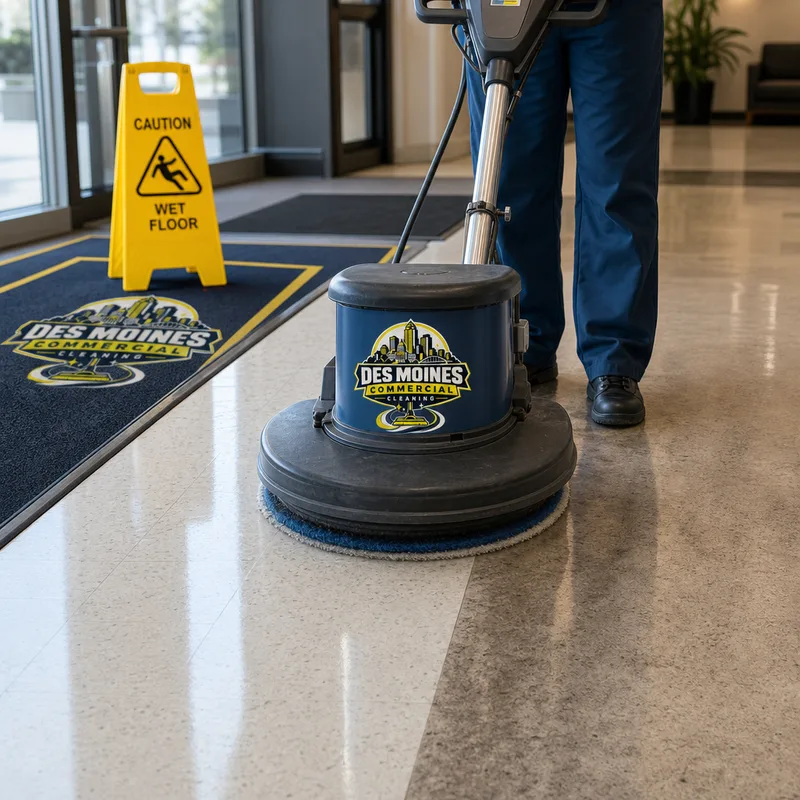
Technician using an auto-scrubber on VCT flooring in an office lobby beside entry matting and a wet floor sign

Facility types

Industrial operations we are set up for

Industrial cleaning covers a wide range of buildings, and size alone is not the deciding factor: access, ceiling height, floor condition, and the production calendar matter more.

Common deep cleaning scopes include:

  • Warehouses and cross-dock buildings with high racking, narrow aisles, and constant lift truck movement
  • Distribution and fulfillment centers with conveyor lines, pack stations, and heavy cardboard dust
  • Light manufacturing and assembly plants with machine bays, work cells, and parts washing areas
  • Fabrication and machine shops carrying metal fines, coolant mist film, and oily floor residue
  • Cold storage, packaging, and bottling buildings where condensation and floor drains drive the schedule

Deep cleaning is also useful before a VIP visit, after a long stretch of heavy occupancy, or when switching cleaning providers. It creates a clear baseline so everyone can tell what “clean” looks like in your building.

If you manage multi-tenant suites, deep cleaning between occupants can shorten turnover time because the space shows better during walkthroughs, and issues are easier to document and address.

Request a Callback

Planning the work

How an industrial scope starts

01

Operations walk

We walk the floor with your plant or warehouse manager during a running shift, because an empty building hides the traffic patterns, the pinch points, and the places product sits where cleaning has to work around it.

02

Hazard and access review

Before any pricing, we go through site rules: PPE by zone, restricted areas, lockout requirements, lift access, water and drain availability, chemical approvals, and who signs off when a crew needs something moved.

03

Shift-window plan

Cleaning is built into a gap: third shift, a weekend, a planned shutdown, or a rolling zone schedule during production. High-bay and floor machine work usually needs a window of its own rather than a slot in nightly service.

04

Zone frequencies

Docks, aisles, break areas, and overheads get separate frequencies instead of one building-wide plan. That puts the spend where complaints come from and avoids paying for monthly attention to a quiet mezzanine.

05

Pilot and adjust

The first cycle is a measurement: how long each zone really takes, whether machine passes are enough, and where equipment access failed. Zone times and frequencies get corrected after that cycle instead of staying an estimate.

Request a Callback
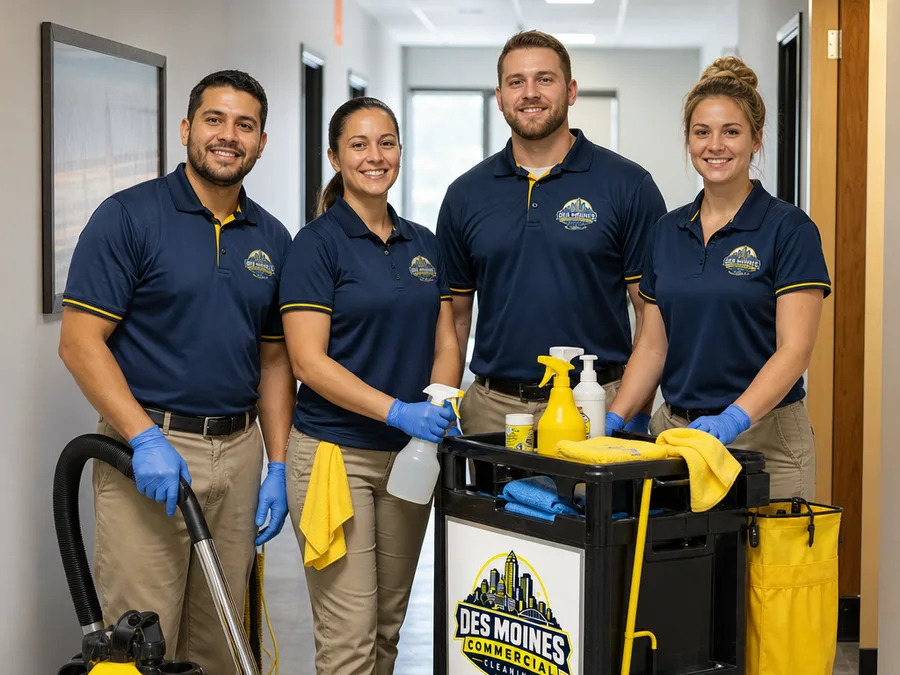
Uniformed Des Moines commercial cleaning crew ready with carts and labeled supplies

Equipment and methods

What we bring on site

Industrial square footage is cleaned with machines, not with more people and mops. What can physically get into your space shapes the scope, so equipment access comes up early in the walk.

We handle post-construction cleanup for office buildouts and renovations across Des Moines, with scopes that typically include:

  • Ride-on and walk-behind scrubbers sized to aisle width, with pad and brush choices set by floor condition
  • Industrial sweepers for debris, pallet splinters, and shrink-wrap scrap ahead of any wet pass
  • HEPA-filtered vacuums and extension tooling for fine dust on surfaces where blowing it down is unacceptable
  • Scissor and boom lift access for overhead work, coordinated with your operators or supplied with ours
  • Pressure washing with wet-vac recovery for dock aprons, trash pads, and equipment bases where drainage allows

If the project is still active, we can coordinate around trades and target specific areas so you can open on schedule. For property managers and contractors, the goal is simple: the space should be clean enough for punch lists, walkthroughs, and move-in without rework.

For facility types that need heavier-duty protocols, the considerations overlap with industrial cleaning in Des Moines, especially around dust control and floor protection during turnover.

Request a Callback

What it costs

How Much Does Industrial Cleaning Cost in Des Moines?

Industrial cleaning is estimated by square foot and by zone, and the rate per foot runs lower than workplace cleaning because the area is large and machine-cleaned. For recurring floor and common-area service, figure roughly $0.03 to $0.12 per square foot per visit, with many industrial accounts in the metro landing between about $800 and $4,000 a month depending on size and visit count. Overhead and high-bay dusting is project work, commonly estimated around $0.10 to $0.30 per square foot of the area below it.

What moves those estimates: total floor area and how much of it is racked, ceiling height and lift requirements, floor condition and whether a restorative pass is needed first, dock count, shift windows and whether the hours are premium ones, PPE and escort requirements, and water and drain access for wet cleaning. Every number above is for planning only. A written quote follows a walk of the floor during a working shift.

Request a Callback

Plant and warehouse answers

Questions from warehouse and plant managers in Des Moines

Can you clean while production is running?

Usually part of it. Break areas, restrooms, offices, and open floor away from active cells can be cleaned during a shift with signage and traffic planning. Overhead dusting and machine scrubbing passes generally need a gap: third shift, a weekend, or a planned shutdown. We map which zones are shift-safe during the walk so nothing waits on a decision later.

Do you remove dust from racking and ceiling-height surfaces?

Yes, using vacuum and lift access rather than compressed air, which relocates dust onto product and equipment. We work with your team to cover or clear what sits below and schedule it by section so the building is not shut down at once. High dusting is scoped as periodic project work, often once or twice a year depending on how fast your dust load builds.

What do you need from us before a crew arrives?

A site contact for the visit, your PPE and sign-in rules, any restricted zones in writing, confirmation that equipment needing lockout is handled by your staff, access to water and a drain if wet work is in scope, and a clear path for machines. Where lifts are involved, we also need to know whether we are using yours or bringing our own.

How do you handle oil, coolant, or chemical spills?

Routine film and residue on floors and equipment bases is part of normal cleaning. A reportable or unknown chemical spill is not something we take on as cleanup; that belongs to your site spill plan and trained responders. We will report what we find, avoid spreading it, and clean the area once your team confirms it has been neutralized and released.

Is our concrete sealed, and does that change the price?

It changes both method and cost. Sealed concrete holds a cleaner surface and responds well to routine scrubbing. Bare or porous concrete absorbs oil and takes more passes for a smaller visual gain, and a heavily soiled slab often needs a one-time restorative scrub before recurring service makes sense. We check absorbency during the walk and say if sealing is the better investment.

Can you cover a shutdown or seasonal clean only?

Yes. Plenty of plants keep daily housekeeping in-house and bring us in for the heavy windows: a summer or holiday shutdown, an audit or customer visit, a line changeover, or an annual overhead and floor reset. Project-only work is scoped the same way as a contract, with zone times and access confirmed before a date goes on the calendar.

Start here

Get an industrial cleaning plan for your facility

Send your square footage, ceiling height, floor type, and the shift windows you can open. We will walk the floor during production and come back with zone frequencies and a written quote.

Request a quote

Tell us about your facility

Send the details and we will arrange a walkthrough, then follow up with a written scope and a price you can compare line by line.