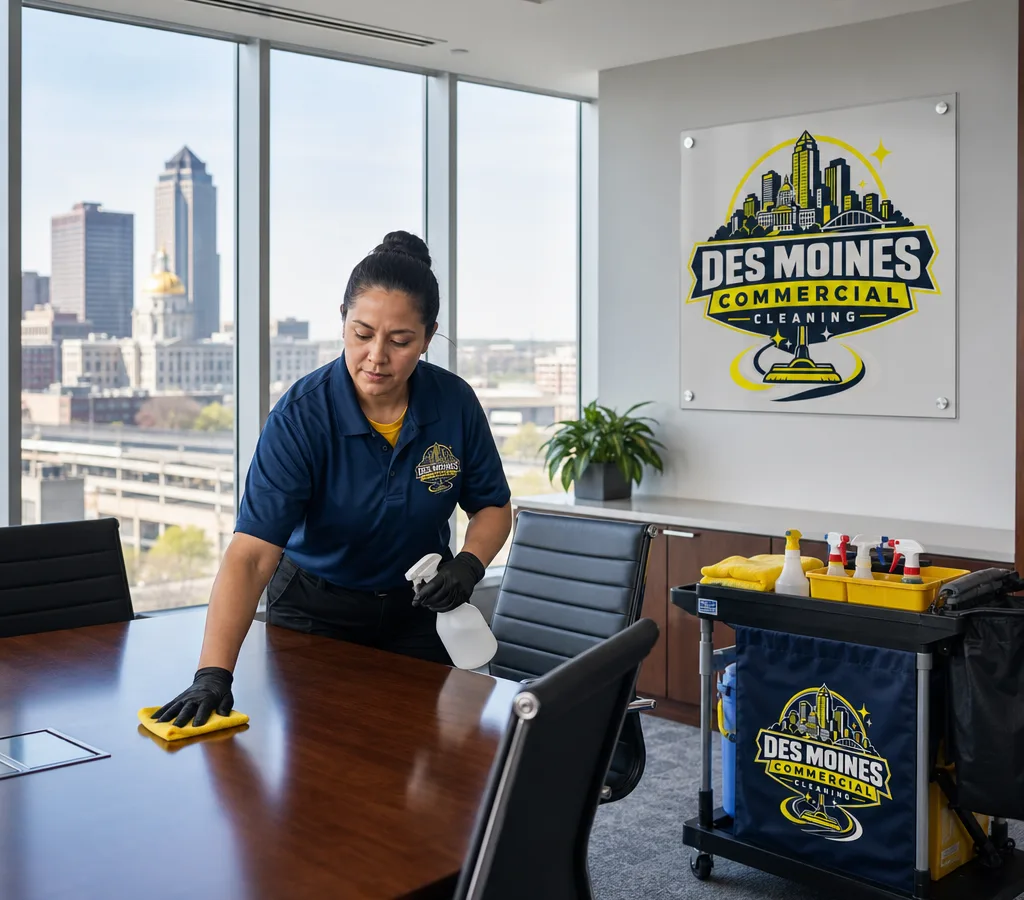
Uniformed cleaner disinfecting a conference table in a modern Des Moines office

Medical cleaning in Des Moines

Medical Facility Cleaning in Des Moines

Cleaning for Des Moines clinics, dental offices, outpatient suites and specialty practices, built around exam room turnover, disinfectant contact times, and waiting areas that fill again the moment you unlock the door.

✓Correct contact times
✓Exam room turnover
✓Clinical zones defined
✓Waiting room touchpoints

Clean versus disinfected

Cleaning and disinfecting are not the same step

A clinic can pass a visual check and still miss the part that matters. Cleaning removes soil from a surface. Disinfecting kills what is left, and it only works if the product stays wet on the surface for the time its label requires. Most of the failures we find in Des Moines medical offices come from that second step: a wipe that dries in twenty seconds against a label asking for four minutes.

Des Moines Commercial Cleaning works in clinics, dental offices, outpatient suites, physical therapy rooms and specialty practices across the metro. Your plan names each room, the product approved for it, and the order rooms are cleaned in, so soil does not travel from a treatment area into an office corridor. Exam rooms, waiting areas and restrooms get the detail they need, and everything clinical (instruments, regulated waste, patient-contact equipment) stays with your staff.

If you are comparing providers, start by looking for three things: a written scope that matches your space, a schedule that protects productivity—before hours, after hours, or low-traffic windows—and a plan for floors. Floors show wear fast in Iowa winters and wet spring days, and they are usually the first place a “quick clean” falls short.

For businesses that need help beyond office environments, our team also handles broader commercial cleaning services in Des Moines with the same approach: define the scope, set the routine, then verify the results.
Request a Callback

Room by room

What we clean in a working clinic

Exam and treatment rooms

Table and stool vinyl, counter and cabinet pulls, sink basins and faucet handles, switch plates, exam light handles, mayo stand surfaces, and the wall area behind the table where paper and hands land. Disinfectant is applied to stay wet for the label contact time.

Waiting rooms and check-in

Chair arms and upholstery seams, the glass or acrylic at reception, pens, clipboards, door pulls, children seating, and the floor inside the entry. Waiting areas carry the highest touchpoint frequency in the building because they turn over every few minutes.

Patient and staff restrooms

Fixtures, grab bars, dispensers, partition latches, changing surfaces, and floors cleaned into the grout rather than mopped over. Clinic restrooms are checked more than once a day when patient volume is high, with dispensers restocked to an agreed par level.

Corridors and nurse stations

Counter runs, keyboard trays and chair bases at charting stations, handrails, door frames, and the baseboard line where carts and wheelchairs scuff. Corridor floors are cleaned with minimal water so welded vinyl seams and coved base stay sealed.

Lab and clean supply rooms

Floors, sinks, outside cabinet faces and open counter space, cleaned around equipment rather than over it. Autoclaves, centrifuges, instrument trays and anything inside a reprocessing cycle stay with your clinical staff, by scope, every visit.

Clinical flooring

Sheet vinyl with welded seams, luxury vinyl tile and sealed grout, each with its own method: neutral cleaner, controlled water, and a fresh pad or mop head per zone, so a treatment room is never cleaned with corridor water.

Request a Callback

Contact time

Contact time, not wiping

Every hospital-grade disinfectant carries a contact time on its label, usually between one and ten minutes, and it is the single thing cleaning crews most often get wrong. A surface wiped and immediately dried has been cleaned, not disinfected. Our crews apply enough product to keep the surface visibly wet for the required time, and they know which surfaces that applies to and which only need detergent.

We match methods to the material and the condition:

  • Disinfectant on exam room touchpoints is left visibly wet for the full label contact time, then allowed to air dry.
  • Detergent and water handle general soil, with disinfectant reserved for touchpoints and patient-contact surfaces instead of lobby floors.
  • Fresh cloths per room, color coded by zone, so a cloth never travels from a restroom to an exam room counter.
  • Your approved product list is followed, including any wipe your practice already buys for equipment you want left to staff.

A good floor plan is measurable. You can see it in cleaner corners, fewer black heel marks, and entry lanes that do not turn gray halfway through the week. If you are already using walk-off mats, we will treat them as part of the system and build routines around keeping the entry clean, not just the middle of the room.

Request a Callback
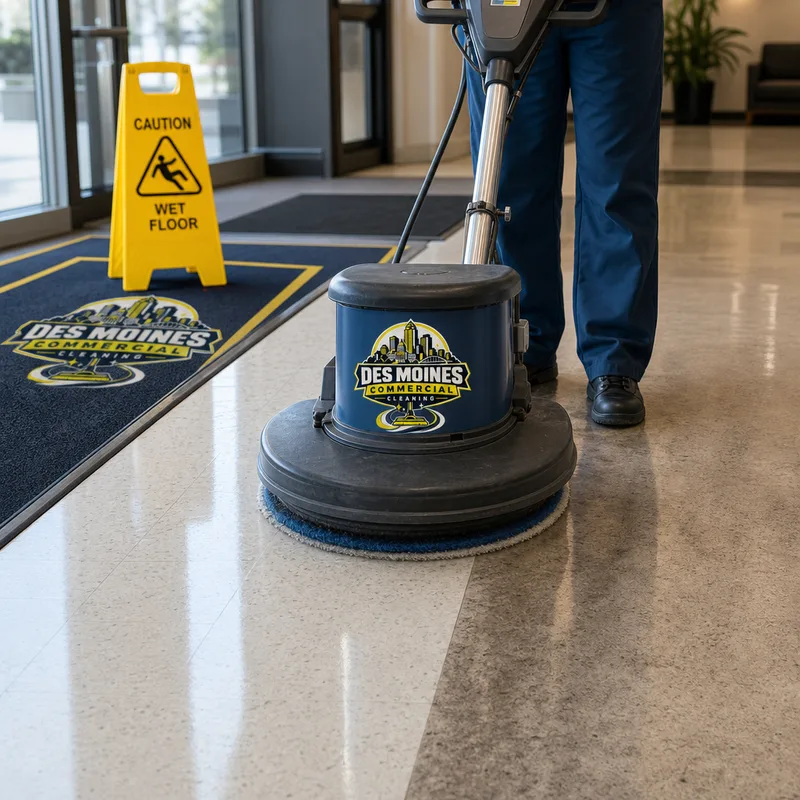
Technician using an auto-scrubber on VCT flooring in an office lobby beside entry matting and a wet floor sign

Zones and boundaries

Where our work stops and your staff takes over

Clear boundaries keep a clinic safe and keep both teams out of each other's way. We clean rooms and surfaces. Anything regulated, sterile or patient-connected stays with your clinical staff, and that line is written into the scope so nobody assumes it was covered.

Common deep cleaning scopes include:

  • Sharps containers and regulated medical waste: your staff handles, seals and stages these, and we do not open, empty or transport them.
  • Instrument reprocessing, autoclave loading and sterile field setup remain entirely with your clinical team.
  • Medication refrigerators, specimen storage and anything labeled with a patient name are never opened or moved.
  • Patient-contact equipment such as ultrasound probes, dental handpieces and blood pressure cuffs is wiped by your staff per the manufacturer directions.
  • We empty general trash and clean the outside of a sharps cabinet or waste enclosure, never anything inside it.

Deep cleaning is also useful before a VIP visit, after a long stretch of heavy occupancy, or when switching cleaning providers. It creates a clear baseline so everyone can tell what “clean” looks like in your building.

If you manage multi-tenant suites, deep cleaning between occupants can shorten turnover time because the space shows better during walkthroughs, and issues are easier to document and address.

Request a Callback

Starting a clinic

How a practice starts

01

Walkthrough with your manager

We walk the suite with your practice manager and whoever owns infection control, room by room, noting surfaces, equipment we must clean around, and the areas that are off limits to any outside crew.

02

Zone map and product list

Each room is assigned a zone (clinical, shared, office) with the product and method for its surfaces. If your practice has an approved disinfectant or a fragrance restriction, it goes on the list.

03

Access after last patient

We confirm when the final appointment ends, how crews enter, how the alarm is handled, and which rooms must be left ready for a morning open rather than cleaned late.

04

Baseline clean

The first visit resets the suite so later visits are maintenance: baseboards, chair bases, vents within reach, and the floor edges a nightly routine never reaches.

05

Room checks and adjustments

A supervisor inspects against the room list, and we raise frequency where volume demands it, usually waiting room touchpoints and restrooms before anything else.

Request a Callback
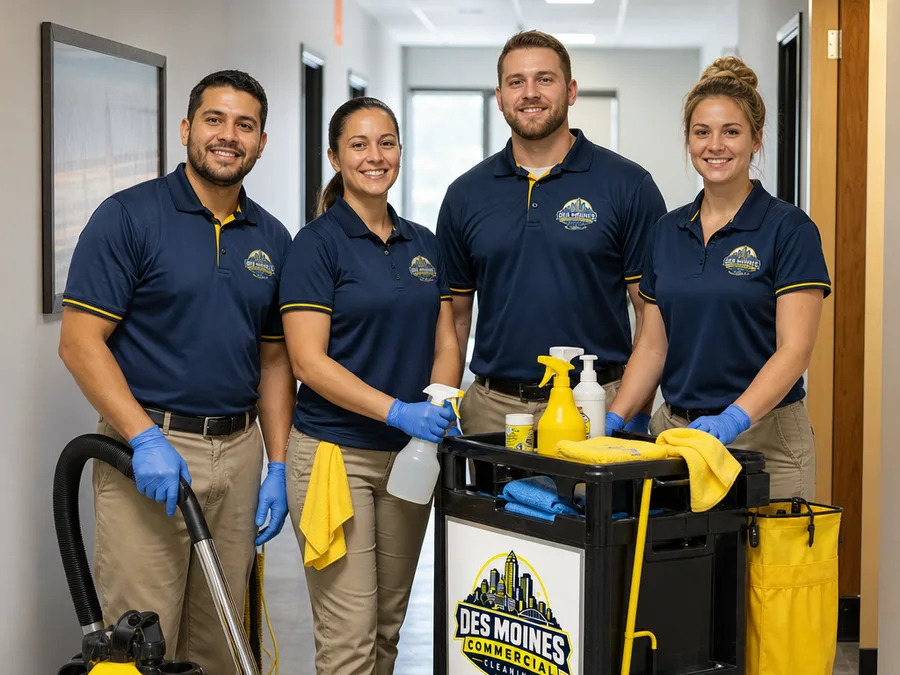
Uniformed Des Moines commercial cleaning crew ready with carts and labeled supplies

Appointment hours

Working around appointments

Clinic schedules do not leave much slack. Most medical work happens after the last patient leaves, but a practice running ten hours a day with a full waiting room usually needs something during the day as well, and that is a different task list than the nightly one.

We handle post-construction cleanup for office buildouts and renovations across Des Moines, with scopes that typically include:

  • Evening service after the last appointment, with rooms left stocked and ready for a morning open.
  • A midday porter pass for waiting room touchpoints, restrooms and the entry when patient volume is heavy.
  • Rooms taken out of service for detail work, scheduled with your front desk so no appointment is bumped.
  • Weekend visits for suites that cannot give up any weekday time at all.
  • Renovation and buildout cleanup quoted separately, because dust control in an occupied clinic is its own job.

If the project is still active, we can coordinate around trades and target specific areas so you can open on schedule. For property managers and contractors, the goal is simple: the space should be clean enough for punch lists, walkthroughs, and move-in without rework.

For facility types that need heavier-duty protocols, the considerations overlap with industrial cleaning in Des Moines, especially around dust control and floor protection during turnover.

Request a Callback

Clinic budgets

How Much Does Medical Facility Cleaning Cost in Des Moines?

Medical cleaning in Des Moines usually estimates out around $0.12 to $0.35 per square foot per visit, a little above general office work because touchpoint disinfection and room-by-room method take more time per thousand square feet. A small clinic or dental office commonly lands near $450 to $1,400 per month depending on visit frequency and how many exam rooms and restrooms are in the plan. A quarterly detail or post-illness reset is often estimated at $0.25 to $0.65 per square foot.

The variables that move those figures: exam and operatory count, patient volume per day, visits per week, restroom count, whether a daytime porter pass is included, flooring type in clinical areas, and your product requirements. These are estimates only. We price a practice after walking the suite, and you get the scope and the number in writing before anything is scheduled. Call 515 393 6898 to set up the walkthrough.

Request a Callback

Practice manager questions

What Des Moines practice managers ask before switching

Do you handle sharps containers or regulated medical waste?

No. Your clinical staff handles, seals and stages all sharps and regulated waste, and your licensed waste vendor removes it. We clean the outside of the cabinet or enclosure and remove general trash only. That boundary is written into the scope in plain language so there is never a question about who was responsible for a container.

What disinfectant do you use in exam rooms?

Usually a hospital-grade disinfectant your practice has approved, used exactly as its label directs. If your infection control lead specifies a product, we use that one and add it to the scope. The important part is not the brand: it is that the surface stays wet for the full contact time, which is where most cleaning crews fall short.

Can you clean during patient hours without disrupting appointments?

A daytime porter pass works well for waiting rooms, restrooms and entries, since those are public areas and the work is quick and quiet. Exam and treatment rooms are better handled after the last appointment, or during a block your front desk deliberately leaves open. We build the day pass and the evening route as two separate task lists.

How do you keep soil from moving between clinical and office areas?

Rooms are grouped into zones, and cloths, mop heads and pads are assigned per zone with color coding. Crews work clean areas before dirty ones and never carry a cloth from a restroom to an exam counter. The cleaning order is part of the written scope, so the sequence is repeatable when a substitute runs the route.

Do you clean dental operatories, and what stays with our team?

We clean operatory floors, counters, cabinet exteriors, sink areas, chair bases and the surrounding surfaces. Handpieces, delivery units, air and water lines, suction lines, trays and anything in a sterilization cycle remain with your dental assistants under your own protocol. Your team usually wipes chair upholstery and barriers between patients, and we handle the room around that.

Can you add a quarterly detail on top of nightly service?

Yes, and most practices should. A nightly route keeps a suite stable but never reaches vents within reach, baseboards behind cabinetry, chair bases, upholstery seams in the waiting room, or floor edges. Scheduling that as a quarterly block, usually on a weekend, resets the suite and keeps the nightly work from slowly losing ground over a year.

Schedule a walkthrough

Get a written scope for your practice

Tell us your exam room count, patient hours and any product your practice already requires, and we will walk the suite and build a room-by-room scope with the disinfection detail written in. Call 515 393 6898.

Request a quote

Tell us about your facility

Send the details and we will arrange a walkthrough, then follow up with a written scope and a price you can compare line by line.