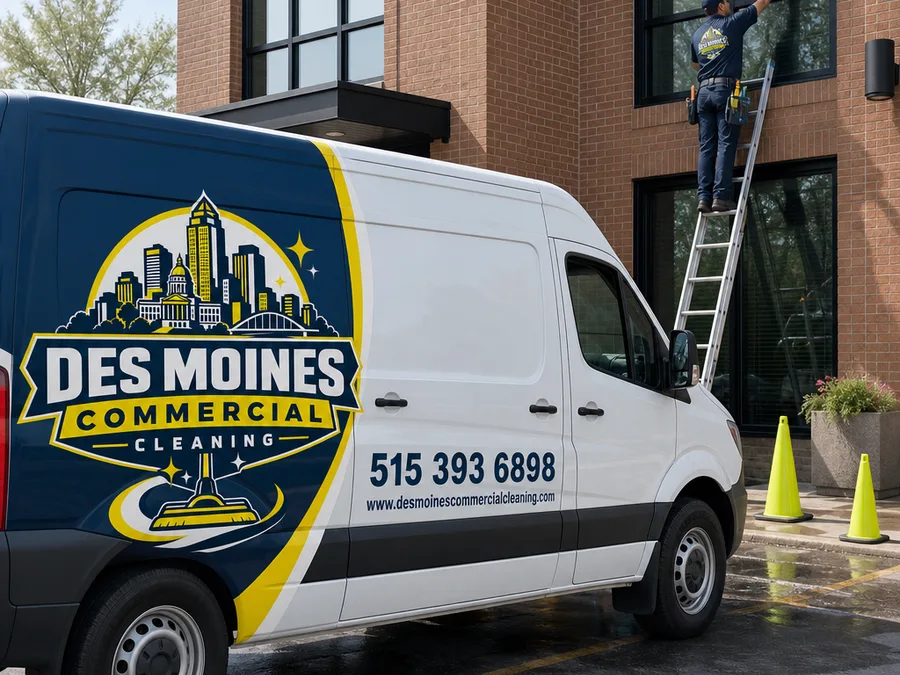
Cleaning technician mopping and detailing a bright modern office corridor with a stocked cleaning cart

School cleaning in Des Moines

School Cleaning in Des Moines

Cleaning for Des Moines schools, daycare centers, preschools and after-school programs, scheduled around dismissal, activities and term breaks, with product choices suited to rooms full of young children.

✓After dismissal windows
✓Low-odor products
✓Illness-season frequency
✓Summer floor cycles

Illness season

Buildings that fill and empty every single day

A school building absorbs a full day of use from hundreds of people and then gets a few hours to recover. The soil load is nothing like an office: it is lunch on cafeteria tables, glue and paint in classrooms, sand and mulch off the playground, and restrooms used in waves of twenty.

We clean elementary and secondary buildings, daycare and preschool centers, and program spaces across the Des Moines metro. The work splits into a nightly routine that has to finish before morning, a touchpoint pass that increases when illness moves through the building, and project work that only fits into term breaks. Product choice matters more here than in most buildings, because rooms are occupied by children within hours of being cleaned.

If you are comparing providers, start by looking for three things: a written scope that matches your space, a schedule that protects productivity—before hours, after hours, or low-traffic windows—and a plan for floors. Floors show wear fast in Iowa winters and wet spring days, and they are usually the first place a “quick clean” falls short.

For businesses that need help beyond office environments, our team also handles broader commercial cleaning services in Des Moines with the same approach: define the scope, set the routine, then verify the results.
Request a Callback

Across the building

What gets cleaned across a school or center

Classrooms and activity rooms

Desk and table tops, chair backs, cubbies and coat hooks, sink corners, carpet squares and floor edges under furniture. Art and science rooms get attention on glue, paint and clay residue that a dry mop will never lift on its own.

Cafeterias and serving areas

Table tops and folding mechanisms, bench seats, the floor under and around seating, and hard floor cleaned for dried spills and milk. Kitchen equipment and food-contact prep surfaces stay with your nutrition staff under their own procedures.

Gyms and multipurpose rooms

Wood or sprung floors dust mopped and damp cleaned by the manufacturer method, bleacher seating and the floor beneath it, mat storage areas and wall pads. Court finish is protected by keeping water and the wrong chemistry off it.

Restrooms at child height

Fixtures, flush handles, stall latches, dispensers, and the lower wall and partition area younger students touch most. Floors are cleaned into the grout, which is where restroom odor in a school building actually lives.

Hallways, lockers and entries

Locker fronts and vents, drinking fountains and bottle fillers, door pulls, stair handrails, and entry matting that has to handle playground sand, cut grass and winter salt in the same week.

Offices, health room and staff areas

Front office counters, the staff break room, and the health room cleaned on its own touchpoint list. Medications, student records and anything inside a locked cabinet are left untouched by crews.

Request a Callback

Touchpoints per day

Touchpoints during illness season

From late fall through early spring the question stops being how clean the building looks and becomes how often the surfaces hands land on are cleaned. Frequency beats product strength here. A disinfectant used once a week on a door pull does less for a building than a detergent used on it twice a day.

We match methods to the material and the condition:

  • Door pulls, handrails, bottle fillers, switches and shared keyboards moved to a daily or twice-daily pass.
  • Classroom table tops cleaned after the day ends and again before morning when a room has reported absences.
  • Restroom touchpoint checks added during the day instead of relying on the nightly clean alone.
  • Frequency raised by room or by wing when your nurse flags a cluster, then returned to the normal routine.

A good floor plan is measurable. You can see it in cleaner corners, fewer black heel marks, and entry lanes that do not turn gray halfway through the week. If you are already using walk-off mats, we will treat them as part of the system and build routines around keeping the entry clean, not just the middle of the room.

Request a Callback
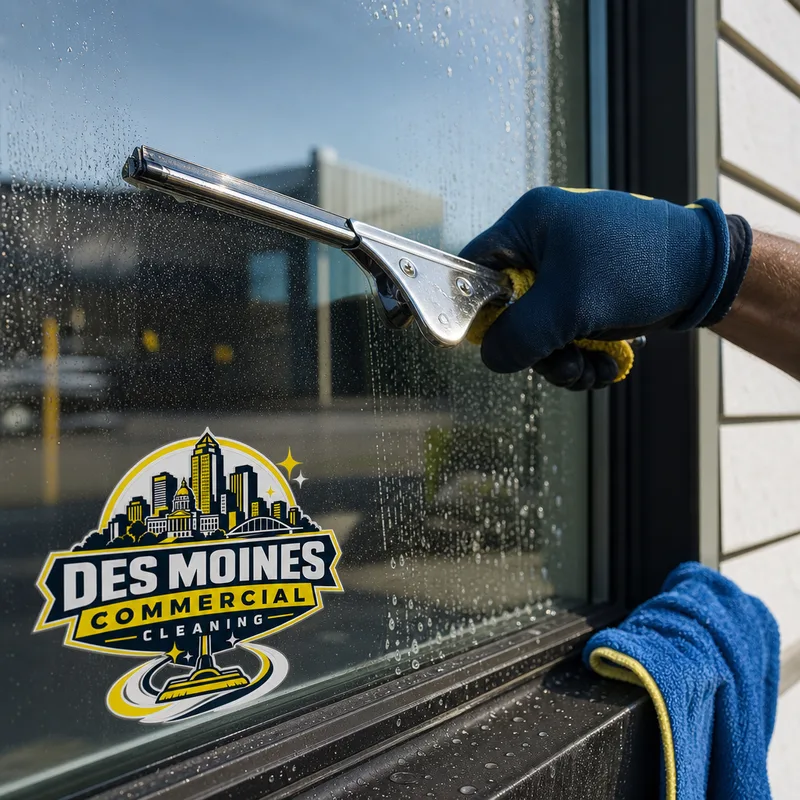
Squeegee pulling clean water from commercial window glass beside a microfiber detail towel

Daycare rooms

Daycare and preschool rooms need their own routine

Infant and toddler rooms are not small classrooms. Almost everything happens at floor level, nearly every surface goes in a mouth eventually, and the room is in use for ten or eleven hours a day. The routine is tighter and the product list is shorter.

Common deep cleaning scopes include:

  • Floors where children crawl cleaned with a fresh mop head per room, and rinsed rather than left with cleaner residue.
  • Cots, mats and cubby shells wiped on the schedule your director sets, while bedding and soft toys stay with your staff.
  • Diapering surfaces, trash enclosures and handwash sinks cleaned as a group, in that order, with dedicated cloths.
  • Low-odor, fragrance-free products chosen so a room is usable soon after cleaning, each used as its label directs.
  • Toys, bottles and feeding items stay with your staff under your center protocol, and we clean the room and storage around them.

Deep cleaning is also useful before a VIP visit, after a long stretch of heavy occupancy, or when switching cleaning providers. It creates a clear baseline so everyone can tell what “clean” looks like in your building.

If you manage multi-tenant suites, deep cleaning between occupants can shorten turnover time because the space shows better during walkthroughs, and issues are easier to document and address.

Request a Callback

Before the term starts

How a school year starts

01

Summer walkthrough

We walk the building with your facilities lead before the year starts, room by room, noting floor types, fixed furniture, storage areas and anything needing project work rather than nightly attention.

02

Build the nightly route

Rooms are grouped into routes a crew can finish between dismissal and lockup, with practices, activities and evening events marked on the calendar so a route is never planned into an occupied gym.

03

Agree the product list

Your district or center approves the products used in classrooms, restrooms and daycare rooms, including fragrance limits and anything you want kept out of the building entirely.

04

Baseline before day one

The building is reset before students arrive: floors finished, restrooms detailed, classroom surfaces cleaned, so the nightly routine starts from a standard everyone has seen.

05

Term check-ins

We walk the building with you at intervals through the year, and adjust before each break, when project work gets scheduled into the days the building is empty.

Request a Callback
PPE-equipped technician removing construction dust from window frames and baseboards in a renovated office suite

Summer and breaks

Work that only fits breaks

Some work cannot be done around children, and a school calendar gives you three or four real chances a year. Winter break, spring break and the long summer window are when floors, carpets and anything needing drying time get handled.

We handle post-construction cleanup for office buildouts and renovations across Des Moines, with scopes that typically include:

  • Hard floor strip and refinish in corridors and classrooms, with cure time the calendar can actually allow.
  • Carpet extraction in classrooms and offices, planned so rooms dry fully before furniture goes back.
  • Gym floor deep cleaning and recoat coordinated with your athletic calendar and the flooring manufacturer method.
  • High dusting of vents, light fixtures and ceiling-height surfaces across the whole building.
  • Furniture moved out and replaced so corners, baseboards and under-cabinet areas get cleaned at least once a year.

If the project is still active, we can coordinate around trades and target specific areas so you can open on schedule. For property managers and contractors, the goal is simple: the space should be clean enough for punch lists, walkthroughs, and move-in without rework.

For facility types that need heavier-duty protocols, the considerations overlap with industrial cleaning in Des Moines, especially around dust control and floor protection during turnover.

Request a Callback

District and center budgets

How Much Does School Cleaning Cost in Des Moines?

School and daycare cleaning in Des Moines usually estimates out around $0.10 to $0.25 per square foot per visit for nightly service. A daycare or preschool center commonly lands near $600 to $1,800 per month depending on room count, operating hours, and how many restrooms and diapering areas are in the plan. Break and summer project work prices separately: carpet extraction is often $0.25 to $0.75 per square foot, and hard floor strip and refinish $0.50 to $1.50 or more.

The figure moves on building size, nightly route count, classroom and restroom counts, floor materials, how many evenings the building hosts activities, and how much break work you want bundled into an annual plan. Everything here is an estimate rather than a quote. We walk the building, size the routes, and put the scope and the price in writing before a crew is assigned. Call 515 393 6898.

Request a Callback

Questions from administrators

What school and center administrators ask us first

Can you clean after dismissal and still be out before activities start?

That depends on the building, and it is the first thing we size. We group rooms into routes timed against your dismissal, practice and event calendar, so a crew is never working in a gym during a game or a cafeteria during a meeting. Buildings with heavy evening use often need a split: classrooms right after dismissal, common areas later.

What products do you use in rooms with young children?

Low-odor and fragrance-free products, used exactly as their labels direct, with your director or district approving the list before we start. In infant and toddler rooms we rinse after cleaning rather than leaving residue on surfaces children touch. We do not make safety or compliance claims beyond that: the product choice and the method are what we control.

How does the routine change during flu season?

Frequency on touchpoints goes up and stays up. Door pulls, handrails, bottle fillers, switches and shared devices move to a daily or twice-daily pass, and restrooms get a daytime check rather than only a nightly clean. If your nurse reports a cluster in one wing, we add passes there specifically instead of changing the whole building.

Do you clean cafeteria tables, or is that kitchen staff?

We clean the dining side: table tops and folding mechanisms, bench seats, the floor under and around seating, and spills dried onto hard floor. The serving line, kitchen equipment and food-contact prep surfaces stay with your nutrition staff under their own procedures. We write the dividing line into the scope so the serving counter is never left to assumption.

Can you do the gym floor and bleachers over a break?

Yes, and a break is the only sensible window because the finish needs time. Gym floor deep cleaning and recoat follow the flooring manufacturer method and your athletic calendar, since the floor is unusable while it cures. Bleacher seating, the floor underneath, and wall pads are usually done in the same visit while the room is already closed.

What gets done over summer that cannot be done during term?

Anything needing drying time or an empty room: hard floor strip and refinish, carpet extraction, furniture pulled out so baseboards and corners get reached, and high dusting of vents and light fixtures. We schedule it against your summer program calendar, since most buildings still host camps or meetings in part of the space through June and July.

Plan next term

Get a building plan before the next term

Tell us your square footage, your dismissal time and how your building is used in the evenings, and we will walk it with your facilities lead and size the nightly routes plus the break work. Call 515 393 6898.

Request a quote

Tell us about your facility

Send the details and we will arrange a walkthrough, then follow up with a written scope and a price you can compare line by line.